What Is Prospecting? The Process, Explained for Small Teams (2026)

Founder and CEO of Ozigi. Writes about go-to-market, content strategy, and the tooling small teams rely on.
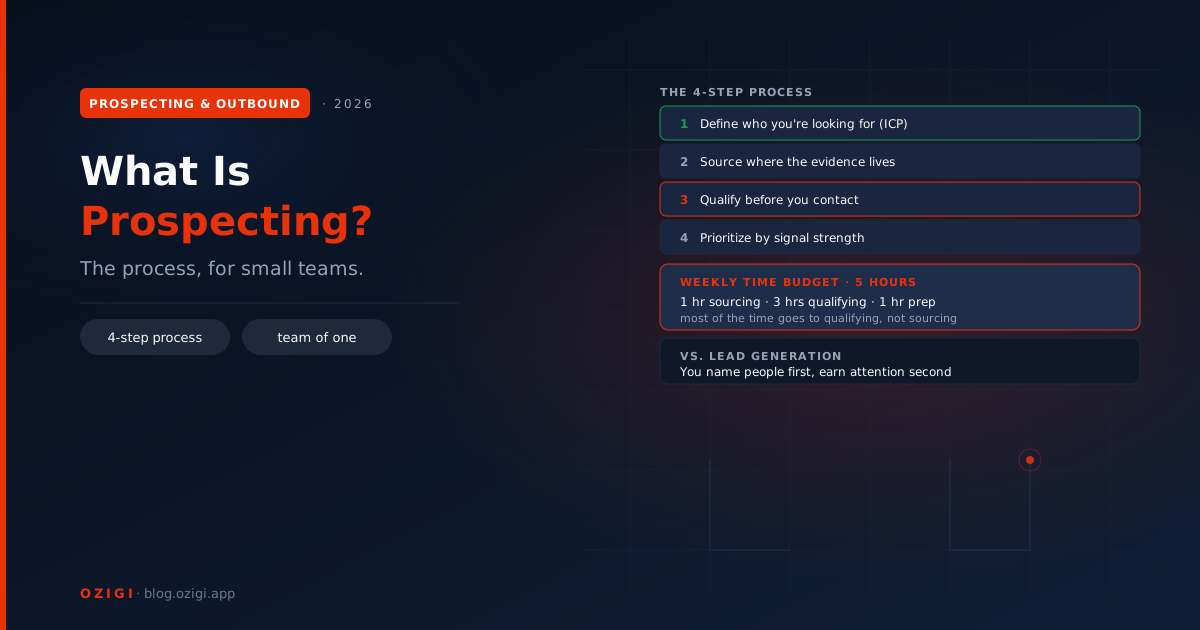
TL;DR: Prospecting is the work of finding and qualifying the specific people who might buy from you, done before any pitch exists. The process has four steps: define who a good buyer is (the ICP), source people who match it from places where the evidence lives, qualify each one against the definition, and prioritize by signal strength before first contact. It differs from lead generation, which attracts unknown buyers inbound; prospecting goes outbound to named ones. A team of one can run the whole loop in about five hours a week, and most of that time should go to qualifying, not sourcing, because list quality sets the ceiling on everything downstream.
Prospecting has a reputation problem: the word evokes a rep grinding through a purchased list of ten thousand contacts, and that image is roughly the opposite of what good prospecting is. The grinding version skips the entire craft, which is deciding who should be on the list at all.
Here is the actual process, sized for teams where the founder is also the sales team.
What Does Prospecting Actually Mean?
Prospecting is identifying, researching, and qualifying potential buyers, prospects, before reaching out to them. The mining metaphor is apt in a way the grind version misses: a prospector's skill is not digging fast, it is reading the terrain to decide where digging is worth it. In sales terms, the terrain-reading is qualification, and it happens before contact, not during a discovery call.
The output of prospecting is not meetings. It is a short, ranked list of people with evidence attached: who they are, why they plausibly have the problem, and what signal says so. Meetings are what outreach does with that list.
Prospecting vs. Lead Generation: What Is the Difference?
Direction. Lead generation builds attraction so buyers you have never heard of raise their hands: content, SEO, free tools, ads. Prospecting goes the other way: you name specific people first and earn their attention second. Lead gen produces inbound leads of unknown quality at unpredictable timing; prospecting produces outbound conversations of chosen quality on your schedule.
Small teams need both, on different clocks. Content compounds over quarters; prospecting produces conversations this month, which is why the bootstrapped outbound playbook pairs them rather than choosing. A prospect who ignores your email may meet your blog post six months later, and the two motions reinforce each other more than either side's advocates admit.
Step 1: Define Who You Are Looking For
Prospecting without a written ideal customer profile is just list-building with extra steps. The ICP is the qualification test every prospect will be graded against: company shape (size, stage, stack), the role that owns the problem, and above all the observable evidence that the problem exists, because "would benefit from our product" describes everyone and selects no one.
The full method, including which signals actually predict buying for developer-facing products, is in the ideal customer profile guide. The one-line summary: define your buyer by what they detectably do, not by demographics alone.
Step 2: Source Where the Evidence Lives
With the ICP written, sourcing becomes a search problem: where does the evidence show up in public? The map for most B2B:
| Source | What it reveals |
|---|---|
| Roles, company stage, what people post about, job changes | |
| Job postings | The problems a company is hiring to fix, in their own words |
| GitHub and package registries | Actual stack, actual activity, for developer products |
| Communities and forums | People describing the pain verbatim |
| Review sites | Users of competitor tools, and their complaints |
| Podcasts, talks, blogs | Decision makers explaining their priorities publicly |
Two sourcing rules. Prefer evidence-rich sources over volume-rich ones: fifty people found through a job posting that names your problem beat five hundred scraped by title. And respect the terms of the platforms you source from, where the line sits for the biggest one is its own topic, covered in LinkedIn scraping: what is allowed.
Step 3: Qualify Before You Contact
Qualification is grading each sourced name against the ICP, and it is the step that separates prospecting from spamming. The practical version is a three-question pass per prospect: does the company match the profile, does this person own the problem, and what specific evidence says the problem is live? No evidence, no list, however good the title looks.
This is where the time should go. A useful budget for a team of one: of five weekly prospecting hours, one on sourcing, three on qualifying and researching, one on prioritizing and prep. Inverting that ratio, heavy sourcing, light qualifying, is how ten-thousand-row lists happen, and those lists then fail downstream as bounces, complaints, and silence.
Step 4: Prioritize by Signal Strength
Not all qualified prospects are equally ready. Rank by the recency and strength of the evidence: a trigger event this week (a funding round, a relevant hire, a public complaint about the problem) outranks a static fit from months ago. Tiering the list, hot signals first, warm fits second, cold matches last, means your best research effort and your first sends go where reply probability is highest.
Then the handoff: each prospect leaves prospecting with the evidence attached, because that evidence becomes the opening line of the first email. Prospecting and outreach are one pipeline, and the research is the part the recipient can actually feel.
How Does a Team of One Run This Weekly?
As a loop, not a project: five hours a week producing 30 to 50 fully qualified, prioritized prospects, which conveniently matches safe daily sending volumes for a small setup. The loop only breaks when qualification gets skipped under time pressure, which is the moment to automate the mechanical parts rather than lower the bar.
The mechanical parts are sourcing and evidence-gathering; the judgment parts are the ICP itself and the final grade. That split is what Ozigi automates: it sources from GitHub, Dev.to, and LinkedIn, scores each person against your written ICP, attaches the evidence, and drafts the first touch from it, so your five hours go to judgment and the conversations that follow. The drafting end is testable free at the cold email generator, no signup required.
Frequently Asked Questions
What is prospecting in sales? The work of finding, researching, and qualifying specific potential buyers before any outreach: defining who a good buyer is, sourcing people who match, verifying evidence of the problem, and ranking them by signal strength. Its output is a short, evidence-backed list, not meetings; outreach converts the list into meetings.
What is the difference between prospecting and lead generation? Direction. Lead generation attracts unknown buyers inbound through content, SEO, and ads; prospecting identifies named buyers and goes outbound to them. Lead gen compounds slowly with unpredictable timing; prospecting produces conversations on your schedule. Small teams run both in parallel.
What are the best prospecting methods? Evidence-first sourcing: job postings that name your problem, public activity that reveals the stack or the pain, trigger events like funding or relevant hires, and communities where buyers describe the problem verbatim. Method quality is measured by evidence per prospect, not names per hour.
What is a prospect vs. a lead? Usage varies, but the working distinction: a lead is anyone who entered your world, a form fill, a scraped name, and a prospect is a lead that passed qualification against your ICP. Prospecting is the act of creating prospects directly, skipping the unqualified-lead stage.
How many prospects should you contact per day? For a small team, 10 to 20 fully researched contacts a day beats hundreds of shallow ones, and it happens to sit inside safe per-inbox sending limits. The constraint that matters is qualification quality: every unqualified name on the list costs deliverability and reputation downstream.
Ozigi runs the sourcing and evidence-gathering, so your prospecting hours go to judgment. Try the free cold email generator, no signup required.
About the author
Founder and CEO of Ozigi. Writes about go-to-market, content strategy, and the tooling small teams rely on.