B2B Lead Generation Email Templates: A 4-Email Sequence That Books Meetings

Founder and CEO of Ozigi. Writes about go-to-market, content strategy, and the tooling small teams rely on.
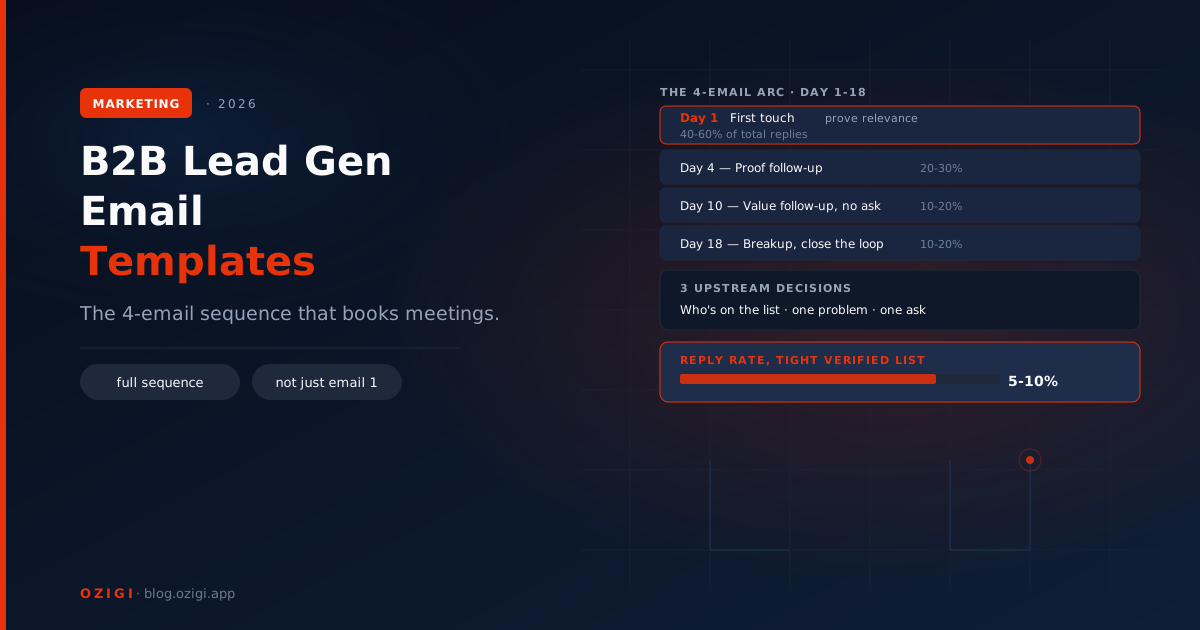
TL;DR: B2B lead generation lives or dies at the sequence level. One email books almost nothing; a planned arc of four does the work: a first touch that proves relevance, a follow-up that adds proof, a follow-up that gives value with no ask, and a breakup that closes the loop. Spacing: day 1, day 4, day 10, day 18. Before any of it, the list decides your ceiling: a tight ICP and verified addresses matter more than any wording. Templates for all four emails are below, each with the slots you must fill per recipient.
Most articles about B2B lead generation emails hand you a first-touch template and stop, as if meetings get booked on email one. They rarely do. Across well-run B2B campaigns, somewhere between a third and half of all replies arrive on a follow-up, not the opener.
So this guide is built the way the campaign is built: as a sequence. You get the arc, the spacing, the template for each position in the arc, and the rule for what makes each one land. Individual email mechanics, subject lines, length, openers, are covered in depth in cold email templates that get replies. This piece is about the campaign around them.
What Makes a B2B Lead Generation Sequence Work?
Three decisions made before the first email: who is on the list, what problem the sequence is about, and what the single ask is. Every failed campaign I have seen broke one of these upstream rules, then tried to fix it with copy.
The list is the ceiling. A mediocre sequence to a precise list outperforms a brilliant sequence to a broad one, every time. Precise means each lead matches a written ideal customer profile and every address is verified before it enters the sequence, because bounces above 2% start damaging deliverability for the whole campaign.
One problem per sequence. The four emails argue one case from different angles. A sequence that pitches a different feature each email reads as a vendor cycling through a brochure. A sequence that returns to one problem reads as a person with a point.
One ask, repeated small. Pick the smallest next step that moves the deal: a 15-minute call, a 90-second video, a yes to receiving an example. Every email in the sequence asks for that same thing in fresh words.
What Is the Right B2B Email Sequence Structure?
Four emails over roughly 18 days, each with a distinct job:
| Position | Day | Job | Reply share it typically earns |
|---|---|---|---|
| First touch | 1 | Prove relevance, name the problem, small ask | 40 to 60% of total replies |
| Follow-up 1 | 4 | Add proof: a number, a named result | 20 to 30% |
| Follow-up 2 | 10 | Give value with no ask attached | 10 to 20% |
| Breakup | 18 | Close the loop honestly | 10 to 20% |
Two structural rules. Follow-ups go in the same thread, so the recipient sees the history without hunting. And the sequence stops at four: longer sequences raise spam complaints faster than they raise meetings, and complaint rate is the metric that gets sending domains flagged, as covered in how many cold emails you can send per day.
Email 1: The First Touch
Subject: [their problem] at [their company]
[One sentence proving you looked: a thing they shipped, posted, hired for, or announced.]
Teams at [their stage or type] usually hit [the one problem this sequence is about] around now. [What you do, one plain clause], and [one proof point with a number].
Worth 15 minutes next week? If the timing is off, a plain no is genuinely useful too.
The rule: the first sentence carries the whole email. It must contain a detail that could not be pasted into 200 other messages. Signals worth using for B2B: a job posting that reveals the pain, a public repo or changelog, a post the decision maker wrote, a tool visible in their stack.
Email 2: The Proof Follow-Up
Subject: same thread, no new subject
One more data point on [the problem]: [a named or described customer at their stage] was seeing [before number], and after [the change] got to [after number] in [timeframe].
Happy to walk through exactly what they changed. Same offer as before: 15 minutes, next week.
The rule: proof means numbers, not adjectives. "Cut bounce rates from 6% to under 1% in three weeks" earns the meeting. "Dramatically improved deliverability" earns the archive button. If you have no customer numbers yet, use your own: what you measured on your own campaigns is legitimate proof and reads more honest than borrowed logos.
Email 3: The Value Follow-Up
Subject: same thread
No ask this time. Put together [the resource: a checklist for their exact situation, a two-minute teardown of their setup, a benchmark from your data] because it is useful whether or not we ever talk.
[The resource itself, or one line on it plus an offer to send it.]
The rule: the value must survive the no. If the "free resource" only makes sense as a step toward buying, it is a pitch wearing a costume and recipients smell it. A genuinely useful artifact does two jobs: it earns replies from people who were on the fence, and it leaves a good taste with everyone else, which matters because B2B markets are small and people move between the companies on your list.
Email 4: The Breakup
Subject: same thread
Closing this out. Either [the problem] is handled or it is not the priority right now, both fair.
I will stop here. If it moves up the list later, [one line on the standing offer]. And if I read the problem wrong for [company], I would rather hear that than nothing, it makes the next campaign better.
The rule: mean the exit. Breakup emails earn their outsized reply share precisely because they are believed. Recipients who reply to a breakup often start with an apology, which is the warmest opening a cold sequence can produce. Sending "one last thing" two weeks later spends that trust permanently.
How Do You Run This Sequence at Volume?
Split the work into research, drafting, and pacing, and automate the first and third completely. For each lead the sequence needs two or three researched inputs: the proof-of-looking detail, the problem signal, sometimes the stack. Gathering those from GitHub, Dev.to, and LinkedIn is lookup work. Pacing, day 1, 4, 10, 18, per lead, across a list of hundreds, is scheduling work. Neither needs a human.
The drafting sits in between. Structure and expansion can be generated; the one sentence that proves a human looked cannot be faked, and neither can the judgment call on which proof point fits which lead. This split is what Ozigi's outbound engine automates: it sources and scores leads against your ICP, drafts each position in the sequence from the lead's actual profile in your saved voice, paces sends inside safe daily limits from your warmed domain, and catches replies so follow-ups stop the moment a conversation starts. You review, add the 10% only you know, and send.
What Reply Rate Should a B2B Lead Generation Sequence Get?
A well-run sequence to a tight, verified list books 5 to 10% total reply rate across the four emails, with 1 to 3% turning into meetings. A generic blast to a purchased list sees under 1% and rising complaints. If your numbers sit between those and you are not sure why, work the diagnosis order in why am I getting no replies to my cold emails: deliverability first, list second, copy last. Most sequences that fail did not fail at the template.
Frequently Asked Questions
How many emails should a B2B lead generation sequence have? Four: first touch, proof follow-up, value follow-up, breakup, over roughly 18 days. Fewer leaves replies on the table, since a third to half of replies come after email one. More than five raises complaint rates faster than meeting rates.
How long should you wait between cold email follow-ups? Three days after the first touch, six after that, then about a week before the breakup. Same thread throughout. Tighter spacing reads as pressure; looser spacing loses the context that makes the thread work.
Do lead generation email templates work if I copy them exactly? No. The structures above are reusable; the bracketed slots are the mandatory part. Verbatim copies of popular templates have been sent at scale for years, and both filters and recipients recognize them. One recipient-specific sentence per email is the floor.
Is sending B2B lead generation email sequences legal? Yes in the US under CAN-SPAM, with real sender identity, a working unsubscribe, and honest subject lines, and yes in most B2B contexts in Europe with stricter conditions. The full picture by jurisdiction is in is cold email legal.
Should follow-ups repeat the first email? Never verbatim, and never as "just bumping this." Each position adds something new: proof in email two, standalone value in email three, an honest close in email four. Repetition without addition trains recipients to ignore the thread.
What matters more, the templates or the list? The list, and it is not close. A tight ICP with verified addresses sets the ceiling; templates decide how close to the ceiling you get. Fix targeting before touching copy, and keep bounces under 2% so deliverability never caps the whole campaign.
Ozigi runs this exact sequence for you: sourced leads scored against your ICP, all four emails drafted from each lead's real profile in your voice, paced inside safe limits. Try the free cold email generator, no signup required.
About the author
Founder and CEO of Ozigi. Writes about go-to-market, content strategy, and the tooling small teams rely on.