Cold Email Templates That Get Replies: 7 Examples + Fill-In Rules

Founder and CEO of Ozigi. Writes about go-to-market, content strategy, and the tooling small teams rely on.
TL;DR: A cold email template is scaffolding, not copy. The seven templates below cover first touch, follow-up, and breakup, and each one has two or three slots you must fill with something specific to the recipient: a thing they shipped, a problem they posted about, a number from their world. Keep the email under 100 words, one ask, no links in the first message. Send follow-ups 3 and 6 days later, each adding something new. Stop after three or four total. A template sent verbatim performs like spam because it is spam.
Every cold email template you find online has already been sent a hundred thousand times. That is the problem with template articles: they hand you the exact words that inbox filters and human pattern-matching have already learned to ignore.
So this one works differently. Each template below is a structure with marked slots, plus the rule for what goes in the slot. The structure is reusable forever. The slots are what make the email yours, and skipping them is the difference between an 8% reply rate and silence.
What Makes a Cold Email Template Actually Work?
The structure carries the reply rate, not the words. Every cold email that gets answered does four jobs in order: proves you know who you are writing to, names a problem they plausibly have, shows one piece of evidence you can help, and makes one small ask. Templates work because they lock that sequence in place. They fail when senders copy the words and skip the proof.
The test before you hit send: could this exact email go to 200 other people unchanged? If yes, you have written spam with better formatting. At least one sentence must be true only for this recipient.
What Is the Best Cold Email Format?
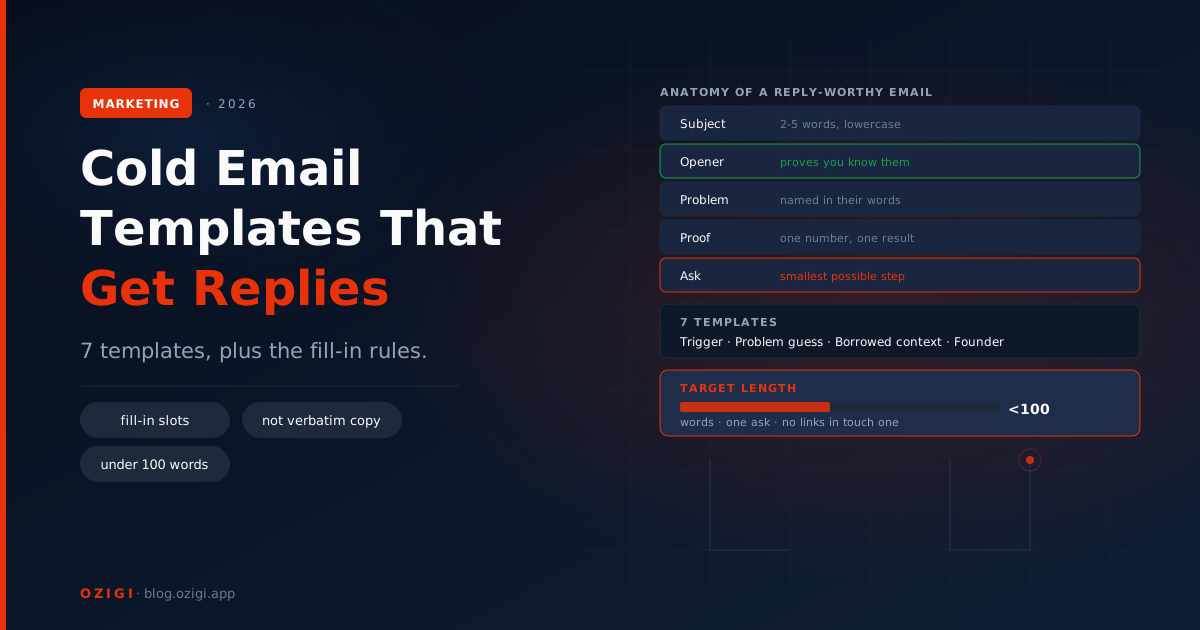
Under 100 words, five parts, one ask, no links in the first touch. The format that holds across every template in this article:
| Part | Length | Job |
|---|---|---|
| Subject | 2 to 5 words, lowercase reads human | Get the open without overpromising |
| Opener | 1 sentence | Prove you know them specifically |
| Problem | 1 to 2 sentences | Name the pain in their words |
| Proof | 1 sentence | One number or one relevant result |
| Ask | 1 sentence | Smallest possible next step |
Skip the "Hope this finds you well" opener entirely. It signals template before the reader reaches your first real sentence. Start with the thing about them.
Template 1: The Trigger
For when the recipient did something observable: shipped a feature, published a post, changed jobs, raised a round.
Subject: your [thing they did]
Saw [specific thing: the v2 launch post, the Dev.to article on X, the new role]. [One genuine sentence of reaction that proves you read or used it.]
Usually when [their situation], [the problem that follows] shows up within a few months. We help [companies like theirs] handle it, [one proof point with a number].
Worth a look? Happy to send a two-minute example first.
The rule for the slot: the reaction sentence must contain a detail that is not in the title. "Enjoyed your post" is a template tell. "The part about counting warmup sends against the daily cap matched exactly what we hit in March" proves a human was here.
Template 2: The Problem Guess
For when there is no trigger, but their role and company stage predict a specific pain.
Subject: [problem] at [company]
Most [role] at [stage or type of company] I talk to are stuck on [specific problem stated in their vocabulary].
If that is you: we [what you do in one plain clause], and [customer or category like theirs] used it to [result with a number].
If it is not you, no worries, and who on your team owns [problem area]?
The rule for the slot: the problem must be narrow enough to be wrong. "Growing your revenue" applies to everyone and moves no one. "Keeping bounce rates under 2% while scaling past two inboxes" is specific enough that the right recipient feels seen and the wrong one still might forward it.
Template 3: The Borrowed Context
For when you share something real: a community, an investor, a former company, a mutual connection who agreed to be named.
Subject: [mutual thing] + quick q
We are both [the shared context]. [If a person: name said you were the right one to ask about X, only if they actually said it.]
I am building [one clause on what you do] and [why their company specifically is a fit, one sentence].
Open to a 15-minute look next week?
The rule for the slot: never fabricate the mutual. A false "John suggested I reach out" gets checked more often than senders think, and one check burns the relationship and the domain reputation together.
Template 4: The Founder First-Touch
For startup founders emailing their first potential customers. This is the startup outreach email that works precisely because it admits what it is.
Subject: building [thing], you came up
I am building [product] because [the origin problem in one honest sentence]. You came up when I looked for people dealing with [the problem]: [the one signal that made you pick them].
Not selling anything yet. I want 20 minutes to hear how you handle [problem] today, and I will share what the other [number] people I have talked to are doing.
Useful trade?
The rule for the slot: the honesty is the tactic. Founders consistently out-reply sales reps with this framing because the ask is genuinely small and the trade is real. It stops working the moment the "not selling" line becomes a bait for a demo pitch on the call.
Template 5: The Demo Ask
For B2B lead generation where the product shows better than it tells.
Subject: [result] for [company]
[Opener sentence proving you know their stack, their tooling, or their public work.]
[Product] does [one clause]. Instead of explaining it, I recorded a 90-second walkthrough using [their site, their repo, their actual use case] as the example.
Want the link?
The rule for the slot: asking permission to send the video outperforms attaching it. The first email stays link-free, which helps deliverability, and the yes-reply turns a cold thread into a warm one before they have seen a single pitch slide.
Template 6: The Follow-Up
For 3 days after the first touch, then 6 days after that. Each follow-up must add something new. "Just bumping this" adds nothing and trains the recipient to ignore you.
Subject: reply in the same thread
One more thought on [problem from email one]: [a new proof point, a relevant resource, a specific idea for their situation, pick one].
[Restate the small ask in fresh words.]
The rule for the slot: the new element is mandatory. A useful pattern: first follow-up adds proof, second follow-up adds a free resource that helps them whether or not they ever reply. If your first touches get opens but the thread stays dead past two follow-ups, the diagnosis order in why am I getting no replies to my cold emails applies.
Template 7: The Breakup
For the final email, 7 to 10 days after the last follow-up. Reply rates on breakup emails are consistently among the highest in the sequence, because a clean exit is the last pattern interrupt available.
Subject: closing the loop
Have not heard back, so I will assume [problem] is either handled or not a priority right now, both completely fair.
I will stop here. If it becomes a priority later, [one sentence on the standing offer]. And if I guessed the problem wrong, I would honestly rather know that than get a polite yes.
The rule for the slot: mean it. No re-entry email two weeks later. The breakup only works when it is real, and your list hygiene is better for actually removing them.
How Do You Personalize Templates at Volume?
Separate the research from the writing, and let the slots define the research. Each template above needs two or three specific inputs: a trigger, a problem signal, a shared context. Finding those inputs is a lookup task, checking what a lead shipped, posted, or complained about on GitHub, Dev.to, and LinkedIn. Filling the template once you have them takes a minute.
That split is also where automation belongs. Tools should gather the signals and draft against the structure; a human should own the one sentence that proves a human was involved. This is the exact division Ozigi's outreach engine is built around: it sources leads from GitHub, Dev.to, and LinkedIn, scores them against your ideal customer profile, and drafts from each lead's actual profile in your saved voice, with the AI vocabulary blocked at generation. You edit the 10% only you know, and the volume stays inside safe sending limits, which are covered in how many cold emails you can send per day.
How Long Should a Cold Email Be?
Between 50 and 100 words. Under 50 usually means the problem sentence or the proof is missing. Over 120 means you are explaining, and explaining is the website's job, not the email's. Every template in this article lands inside that range when the slots are filled with single sentences, which is by design. If a filled template runs long, cut the proof to one number and the ask to one line before touching anything else.
Frequently Asked Questions
How long should a cold email be? 50 to 100 words. Long enough for a specific opener, a named problem, one proof point, and one ask. Short enough to read entirely inside the inbox preview on a phone, where most cold email gets its three seconds of attention.
Should I use my real name for cold email? Yes, real name and real company, always. Fake or vague sender identities violate CAN-SPAM, tank deliverability, and kill trust before the first line. The full compliance picture is in is cold email legal. Send from a separate outreach domain to protect your main one, but be exactly who you are on it.
How many follow-ups should a cold email sequence have? Two or three after the first touch, so three or four emails total: day 1, day 4, day 10, and an optional breakup around day 17 to 20. Each must add something new. Sequences past five emails raise complaint rates faster than they raise replies, and complaint rate is the number that gets domains flagged.
Can I send these templates word for word? No, and not because of copyright. Thousands of people copy popular templates verbatim, so filters and recipients have seen the exact phrasing. The structures are reusable; the slots are mandatory. One recipient-specific sentence per email is the minimum bar.
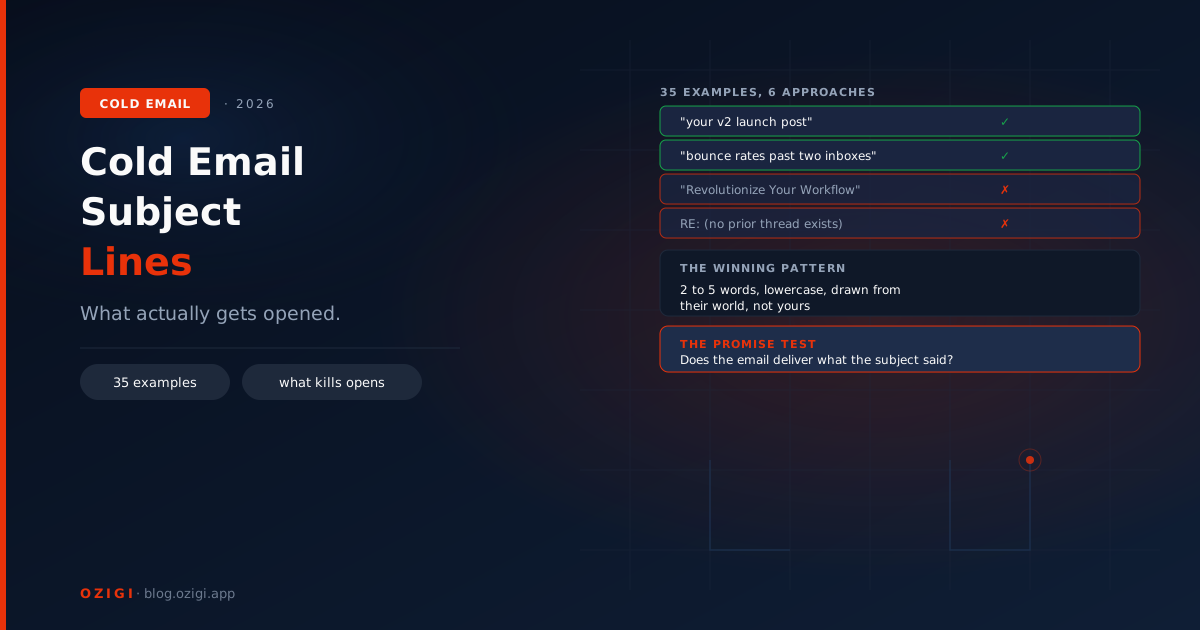
What subject lines work for cold email? Two to five words, specific, lowercase, no clickbait. "your v2 launch post" outperforms "Quick question" because it proves relevance before the open. The subject's only job is to earn the open honestly; a bait-and-switch subject earns an open and a spam complaint together.
Do cold email templates still work in 2026? The structures work; the verbatim words do not. Reply rates now track the specificity of the slots, not the cleverness of the template, because both filters and readers have been trained on a decade of copied sequences. Filled properly and sent inside safe daily limits from a warmed domain, well-run campaigns still see 5 to 10% reply rates.
Ozigi writes first-touch emails from each lead's actual profile, in your voice, with the template-speak blocked at generation. Try the free cold email generator, no signup required.
About the author
Founder and CEO of Ozigi. Writes about go-to-market, content strategy, and the tooling small teams rely on.