Developer Marketing: How to Market to People Who Hate Marketing (2026)

Founder and CEO of Ozigi. Writes about go-to-market, content strategy, and the tooling small teams rely on.
TL;DR: Developers are not anti-marketing, they are anti-being-marketed-at, and the difference is the whole playbook. They trust documentation, working code, peers, and search results, and they distrust ads, gated content, superlatives, and anything that smells like a funnel. What works: excellent docs as a marketing asset, honest technical content that ranks, a genuinely usable free tier, presence where developers already gather, and outreach built on their public work. What backfires: buzzwords, fake community engagement, gating, and hype. A team-of-one playbook is at the end.
Developer marketing has a reputation for being impossible, and the reputation comes from watching normal marketing bounce off this audience. The banner ads get blocked. The whitepaper gate gets abandoned. The "revolutionary AI-powered platform" email gets deleted on the second word.
None of that means developers cannot be reached. It means they buy like engineers: they search the problem, check what peers use, read the docs, and try the thing. Marketing that positions itself along that path works remarkably well, partly because so few companies bother to do it properly.
What Do Developers Actually Trust?
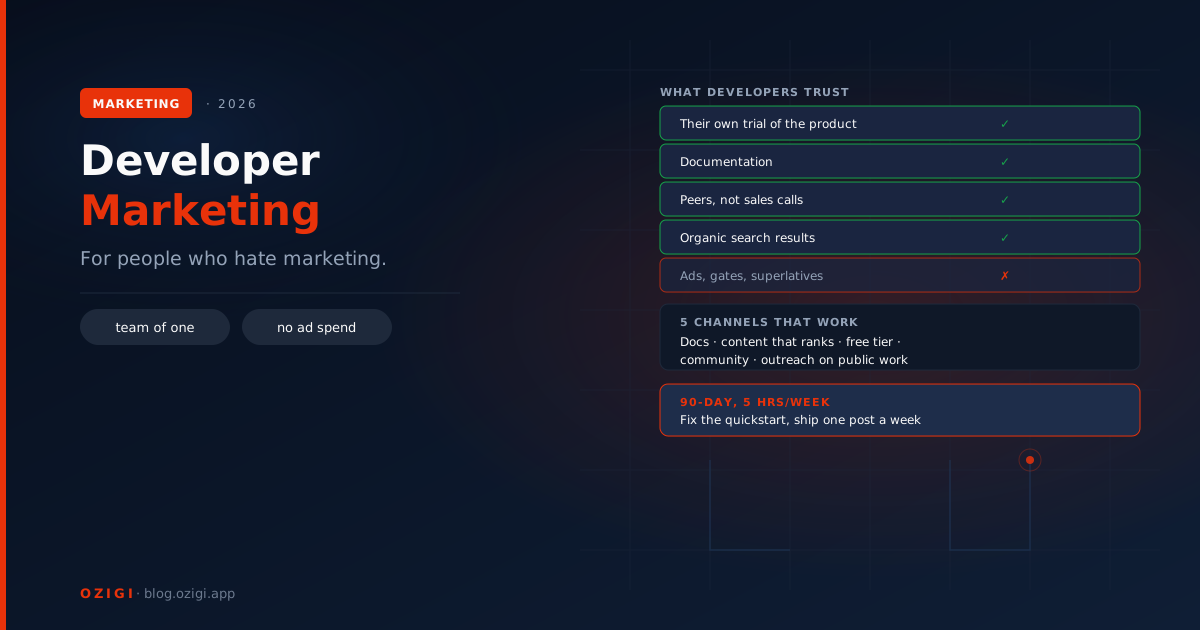
Four sources, roughly in order: their own trial of the product, documentation, peers, and organic search results. Notice what is not on the list: ads, analyst reports, sales calls, and your homepage's adjectives.
This ranking explains every rule in this guide. Trust concentrates in things that cannot easily lie, code runs or it does not, docs answer the question or they do not, a peer has no commission. So developer marketing is mostly the discipline of putting truthful, checkable artifacts where the buying path already goes, and removing everything that pattern-matches to persuasion.
Channel 1: Documentation as Marketing
For a developer product, docs are the highest-converting page on the site, evaluated before pricing, before the case studies, sometimes before signup. Good docs signal that the product is maintained, that edge cases were considered, and that the team respects the reader's time. Bad docs signal what using the product will feel like.
The marketing move is treating docs like a product surface: a quickstart that gets to a working result in minutes, honest limitation notes, and copy-pasteable examples that actually run. Public docs also rank for the long tail of "how to do X" queries in your space, which makes them the quietest SEO asset a devtool has.
Channel 2: Technical Content That Ranks
Developers start at the search bar with their exact problem, and increasingly at AI answer engines, which makes bottom-of-funnel technical content the compounding channel for this audience. The order of what to write and why is the spine of the content marketing playbook; the developer-specific additions are these:
Teach the problem, not the product. "How to detect schema drift" earns trust from every reader; "why our platform is the leader in schema drift detection" earns the back button. The product appears at the end, as the way to skip the manual work just taught.
Publish real engineering content. Post-mortems, benchmarks with methodology shown, "how we built X" pieces. This content gets shared developer-to-developer, which is the distribution that matters.
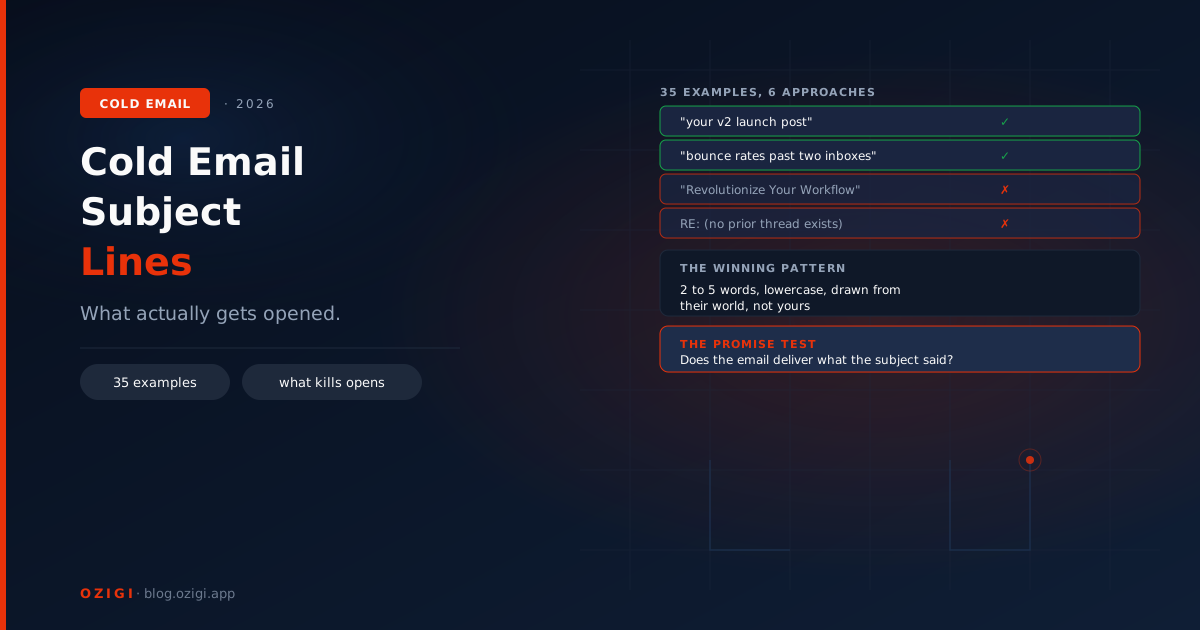
Write like an engineer, not a brand. No superlatives, no buzzwords, claims with numbers attached. The vocabulary that triggers the marketing-detector is catalogued in AI words to avoid, and developers run the strictest version of that detector in any audience.
Structure for answer engines. Developers ask coding assistants and AI search before they ask Google now, and getting cited there has its own rules, direct answers, real numbers, question headings, covered in the GEO and AEO guide.
Channel 3: The Free Tier That Actually Works
Trying the product is a developer's highest-trust source, so the free tier is a marketing channel, arguably the main one. The bar: a developer should reach the product's core value without a sales call, without a credit card, and ideally without talking to anyone. Every gate between them and the working result deletes a percentage of your funnel, and the ungated approach is also the honest signal that the product survives being tried.
Time-boxed trials underperform usage-boxed free tiers for this audience, because evaluation happens in stolen hours across weeks, not in a neat 14-day window.
Channel 4: Being Present Where Developers Gather
Developers decide with peers: specific subreddits, Discords, Hacker News, Stack Overflow, conference hallways. The rules for showing up there without being the company everyone screenshots are strict, the 10-to-1 contribution ratio and its rationale are covered in marketing strategies for technology companies, and they are stricter for developer communities than anywhere else. Astroturfing gets detected, named, and archived permanently.
The sustainable version for a small team is founder-led: one technical founder being genuinely useful in two communities beats a "community manager" being present in ten, per the mechanics in marketing for technical founders.
Channel 5: Outreach Built on Public Work
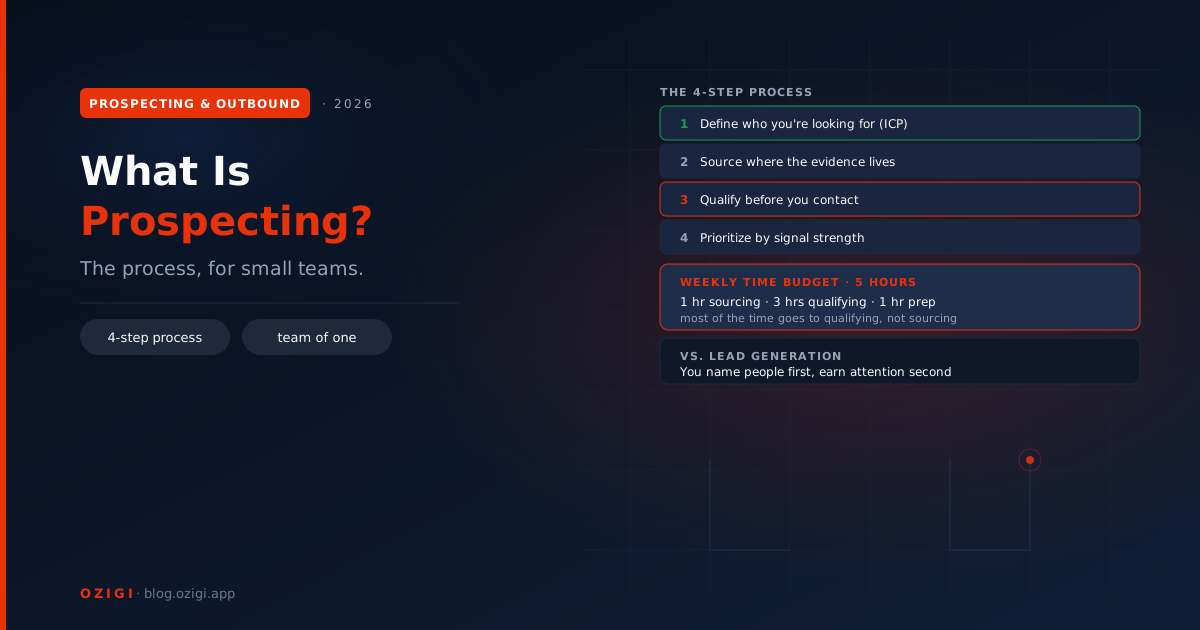
Cold outreach to developers works under exactly one condition: the message is about their actual work. Developers leave the richest public trail of any professional audience, repos, issues, package choices, Dev.to and blog posts, conference talks, and outreach that engages with that trail specifically reads as professional respect rather than spam.
The targeting mechanics, which signals predict the problem you solve, live in the ICP for developer products guide, and the sequencing in outbound for bootstrapped startups. The volume stays low and the specificity high; this is the audience where one fabricated-feeling sentence costs the whole domain its reputation. Sourcing from that public trail is also exactly what Ozigi is built for: it pulls leads from GitHub, Dev.to, and LinkedIn, scores them against your ICP, and drafts from what each person actually shipped.
What Backfires in Developer Marketing?
The anti-patterns, each one a trust withdrawal:
| Anti-pattern | What the developer reads |
|---|---|
| Buzzword copy ("revolutionary AI-powered platform") | The team cannot describe what it does |
| Gated technical content | The content cannot survive being free |
| Fake community engagement | The company thinks we are stupid |
| Superlatives without benchmarks | The benchmarks lost |
| Aggressive retargeting | The product cannot earn a second visit honestly |
| Sales call required to see pricing | The price is a negotiation trap |
The common thread: developers treat marketing signals as data about the product. Every dishonest or evasive signal is read as a product defect, because in their experience, it usually is.
The Team-of-One Developer Marketing Playbook
Ninety days, five hours a week: weeks 1 to 2, fix the quickstart until a stranger reaches value in under 15 minutes, and write the ICP. Weeks 3 to 12, ship one bottom-of-funnel technical post per week, spend 30 minutes a day being useful in two communities, and run 10 to 15 researched outreach emails a day to developers whose public work shows the problem. Measure signups by source, time-to-first-value in the product, and rankings on ten problem-shaped queries. At day 90, double what moved.
The constraint in that plan is the weekly technical post, it is the compounding asset and the biggest time cost. That production gap is what the free long-form generator is for: it drafts from your raw material, your benchmark data, your post-mortem notes, in your voice, with the marketing vocabulary from Group 1 through 4 blocked at generation. No signup, which given everything above, you would expect.
Frequently Asked Questions
What is developer marketing? Marketing to software developers as buyers or adopters, which in practice means positioning truthful, checkable artifacts, docs, technical content, a working free tier, peer presence, along the path developers already use to evaluate tools, instead of interrupting them with ads and gates they have trained themselves to ignore.
How is marketing to developers different from normal B2B marketing? The trust sources invert. Normal B2B leans on brand, analysts, and sales relationships; developers trust their own trial, documentation, peers, and search, and they read persuasion signals as product defects. The playbook shifts accordingly: docs and free tier become the top of the funnel, and content teaches problems instead of pitching.
Do ads work for developer marketing? Mostly no. Developers block, ignore, or distrust display ads, and paid social buys impressions from an audience trained against them. The narrow exception is search ads on high-intent, problem-shaped queries where the landing page is genuinely the answer. Spend the budget on docs and content first.
How do you market a devtool with no marketing team? Founder-led, two channels, held for two quarters: one bottom-of-funnel technical post a week plus either community presence or researched outreach, on a fixed five-hour weekly budget. The full 90-day version is in the playbook above; the general small-team framing is in marketing strategies for technology companies.
What content do developers actually read? Content that solves the problem they searched: how-tos, honest comparisons, benchmarks with methodology, post-mortems, and "how we built it" engineering posts. What they skip: gated whitepapers, thought leadership without code, and anything whose vocabulary signals marketing wrote it.
Ozigi runs the content and outreach halves of this playbook: leads sourced from GitHub, Dev.to, and LinkedIn, outreach drafted from real public work, and technical content in your voice with the marketing-speak blocked. Try the free long-form generator, no signup required.
About the author
Founder and CEO of Ozigi. Writes about go-to-market, content strategy, and the tooling small teams rely on.