Follow-Up Email After No Response: Templates for 6 Situations (2026)

Founder and CEO of Ozigi. Writes about go-to-market, content strategy, and the tooling small teams rely on.
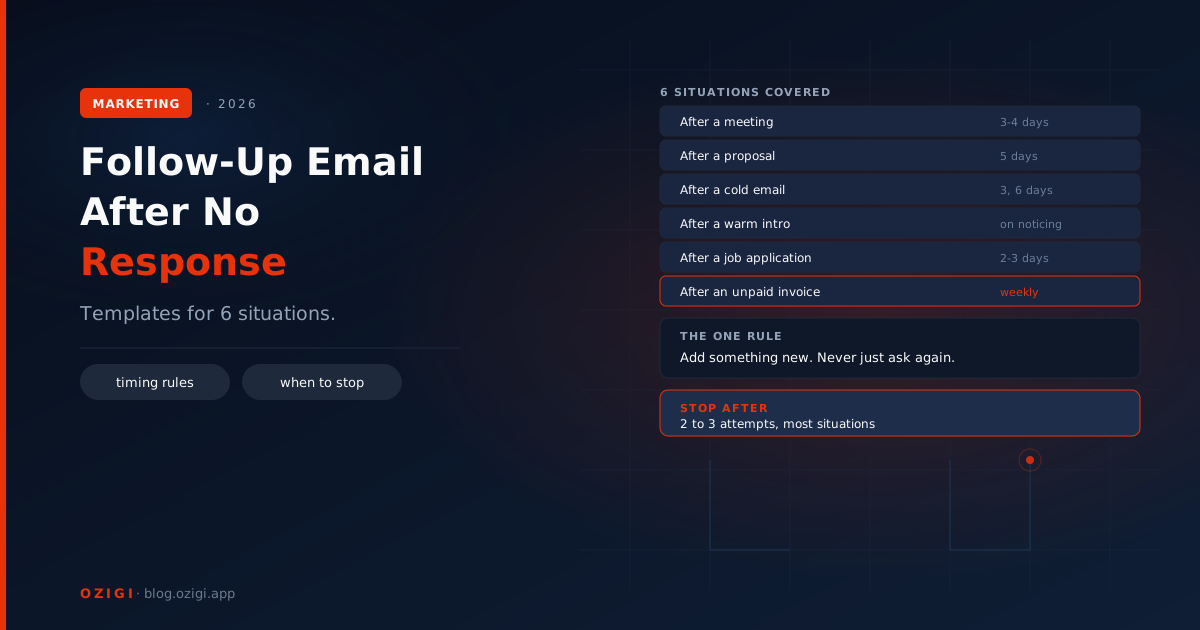
TL;DR: The rule for every follow-up after silence: add something new, never just ask again. "Just checking in" makes the reader relive ignoring you; a new number, a resource, or a shorter version of the ask gives them a fresh reason to reply. Wait 3 to 5 business days for most situations, send in the same thread, and stop after two or three attempts. Templates for six situations are below: after a meeting, a proposal, a cold email, an introduction, a job application, and an unpaid invoice.
Silence almost never means what it feels like. Your email arrived during someone's worst Tuesday, got mentally filed under "later," and later never came. The follow-up exists because of how inboxes work, not because you did anything wrong, which is why the apologetic follow-up ("so sorry to bother you again") is the weakest one you can send.
The strong follow-up does one thing: it makes replying easier than it was last time. Every template below applies that rule to a different situation.
What Makes a Follow-Up Email Work After No Response?
Three properties: it lives in the same thread, it adds something the first email did not have, and it shrinks the ask. Same thread means the reader gets the context without scrolling to find your name. The new element, a number, a resource, a deadline that actually exists, gives them a reason to reply now that did not exist before. And the smaller ask lowers the cost of responding: "worth a call?" becomes "does Thursday or Friday work?" becomes "should I close this out?"
What kills follow-ups is narration. "Just following up," "circling back," "bumping this to the top of your inbox" all describe the email instead of adding to it, and each one quietly scolds the reader for the silence.
Template 1: After a Meeting With No Response
Subject: same thread as your recap
Adding one thing to the recap: [a resource, an answer to something left open, a next-step detail].
To keep this moving, the only decision needed from your side is [the single decision]. Everything else can wait.
Timing: 3 to 4 business days after the recap. The move is reducing the decision surface: meetings generate five open threads, and follow-ups die when they ask someone to resolve all five.
Template 2: After a Proposal or Quote
Subject: same thread
One thing I should have included: [a relevant example, a payment option, an answer to the objection you suspect].
If the number is the issue, say so plainly, there is usually a version that fits. And if priorities shifted, that is useful to know too, no hard feelings either way.
Timing: 5 business days, then once more a week later. Naming the likely objection out loud, price, timing, an internal blocker, gets more honest replies than pretending the objection does not exist.
Template 3: After a Cold Email
Subject: same thread
One more data point on [the problem]: [new proof with a number].
Same offer as before: 15 minutes, or a two-minute example first if that is easier.
Timing: 3 days, then 6. Cold follow-ups are their own discipline with their own arc, proof, then value, then a breakup, and the full four-email structure is in the B2B lead generation sequence guide.
Template 4: After an Introduction Went Quiet
Subject: same thread, keep the introducer visible or not, judgment call
[Introducer] connected us a couple of weeks back and I dropped the thread, that is on me. Still keen to [the original reason], and I can make it easy: [one concrete, small suggestion with a time].
Timing: whenever you notice, sooner is better. Taking the blame for the stall, even when the silence was theirs, removes the awkwardness that keeps these threads dead. Warm intros deserve more persistence than cold email; the introducer's credibility is on the line with yours.
Template 5: After a Job Application or Interview
Subject: same thread as the thank-you note
Following the timeline you mentioned, [the date] has passed, so checking in on where things stand.
Since we spoke, [one new relevant thing: a shipped project, a certification, a result]. Still very interested, and happy to provide anything that helps the decision.
Timing: 2 to 3 business days past whatever timeline they gave, one follow-up, maybe a second a week later. The new-accomplishment line does double duty: it adds information and quietly signals you have options.
Template 6: After an Unpaid Invoice
Subject: same thread as the invoice
Flagging that invoice [number] for [amount] passed its due date on [date]. Likely just slipped through, it happens.
Attached again for convenience. If something about it needs correcting on my end, tell me and I will turn it around same day.
Timing: the day after due, then weekly, in writing every time. Tone stays warm, cadence stays relentless. Assume the oversight, never accuse, and keep the paper trail clean in case warmth eventually has to give way to process.
How Long Should You Wait, and When Should You Stop?
| Situation | First follow-up | Second | Stop after |
|---|---|---|---|
| Meeting | 3 to 4 days | 1 week later | 2 to 3 attempts |
| Proposal | 5 days | 1 week later | 3, then a breakup |
| Cold email | 3 days | 6 days later | 3, then a breakup |
| Warm intro | On noticing | 1 week later | 3, persistence earned |
| Job application | Past their stated date | 1 week later | 2 |
| Invoice | Day after due | Weekly | Never, escalate channel |
Stopping is part of the craft. Past the limits above, additional emails stop being persistence and start being pressure, and pressure gets archived, or reported. For anything sales-shaped, the honest breakup email consistently outperforms one more nudge, template and reasoning in the sequence guide.
One more filter before any follow-up goes out: read it aloud. Follow-ups slide into stiff, passive-aggressive formality faster than any other email, "as per my previous email" is the classic tell, and the rewrite rules in conversational cold email examples fix exactly that register. And if you are sending follow-ups at any volume, the free cold email generator drafts them with the new-element structure built in and the corporate filler blocked, no signup needed.
Frequently Asked Questions
How do you politely follow up after no response? Send in the same thread, add something new, a number, a resource, an answer to their likely objection, and shrink the ask. Skip "just checking in" and any apology for emailing. Polite means making the reply easy, not making yourself small.
How long should you wait before sending a follow-up email? Three to five business days for most professional situations, three for cold outreach, the day after due for invoices, and just past their stated timeline for hiring. Under 48 hours reads as pressure everywhere except invoices.
How many follow-up emails is too many? Two to three total attempts for most situations, with sales sequences capped around four including a breakup. Invoices are the exception: those continue weekly until paid, warmly and in writing.
What should you say in a follow-up email after no response? Lead with the new thing, then restate the ask smaller. "One thing I should have included: [X]. The only decision needed from your side is [Y]." Never narrate the follow-up itself, and never make the reader relive the silence.
Should a follow-up email be in the same thread or a new one? Same thread, almost always. It carries the context, keeps the history honest, and spares the reader the search. A new thread makes sense only when the subject genuinely changed or the original thread is weeks dead.
Ozigi drafts follow-ups that add something instead of asking again, in your voice, with the filler blocked. Try the free cold email generator, no signup required.
About the author
Founder and CEO of Ozigi. Writes about go-to-market, content strategy, and the tooling small teams rely on.