LinkedIn Scraping: What It Is, What's Legal, and What to Do Instead

Founder and CEO of Ozigi. Writes about go-to-market, content strategy, and the tooling small teams rely on.
TL;DR: LinkedIn scraping is the automated extraction of profile and company data at scale. Legally it sits in a gray zone that is narrower than tool vendors imply: US courts have gone back and forth on whether scraping public pages violates hacking law, but LinkedIn's user agreement bans it outright, LinkedIn actively litigates against scrapers, and privacy laws like GDPR apply to the scraped data regardless of how it was collected. The practical risks are account restriction, legal exposure, and stale data. The compliant alternatives, manual research, LinkedIn's own products, and evidence-based sourcing across public developer platforms, cost more effort per name and produce better lists anyway.
Search for LinkedIn scraping and you find two genres: tool vendors saying it is basically fine, and LinkedIn saying it is basically theft. Both are talking their book. Here is the picture without a book to talk, what the practice is, where the law actually stands, what it costs in practice, and what a small team should do instead.
This is general information, not legal advice; for decisions that matter, ask a lawyer who knows your jurisdiction.
What Is LinkedIn Scraping?
LinkedIn scraping is using automated tools to extract data from LinkedIn at volume: names, titles, companies, work histories, connections, post activity. The methods range from browser extensions that harvest as you browse, to headless bots crawling profiles, to vendors selling pre-scraped databases of hundreds of millions of profiles.
The demand behind it is legitimate: LinkedIn holds the best structured map of who works where, and prospecting runs on exactly that information. The question was never whether the data is useful. It is whether taking it this way is lawful, allowed, and wise, three different questions with three different answers.
Is LinkedIn Scraping Legal?
The most honest short answer: it depends on where you are, what is scraped, and what happens to the data afterward, and it is legal far less comprehensively than scraping-tool marketing suggests. The long answer has three layers.
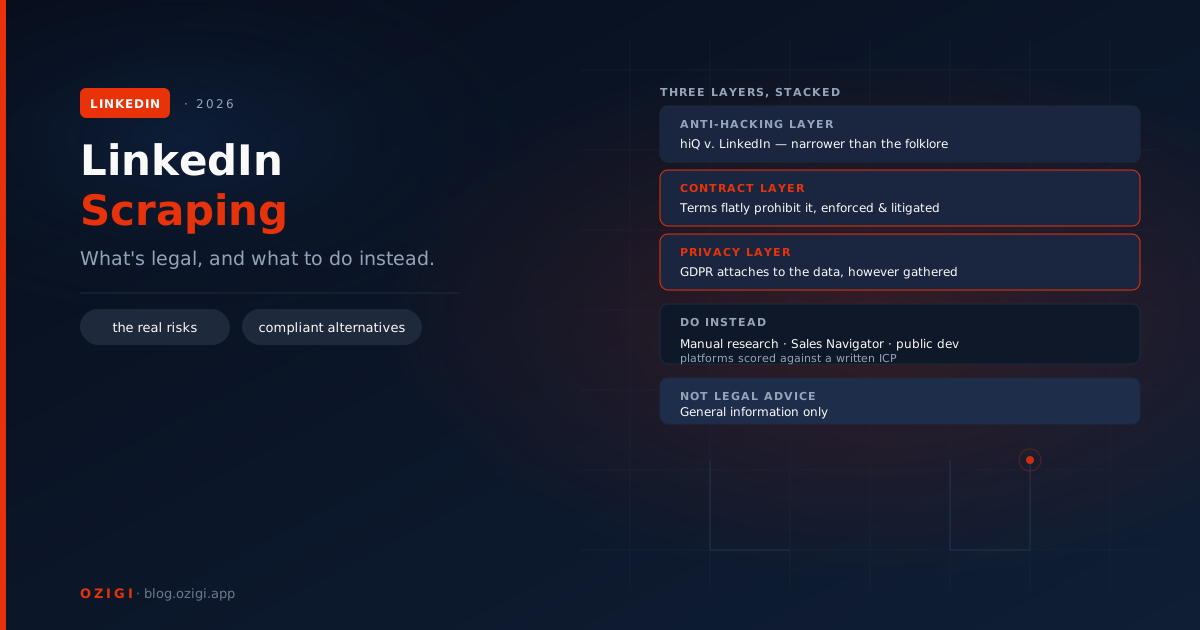
The anti-hacking layer. The famous US case, hiQ v. LinkedIn, spent years on whether scraping publicly visible pages violates the Computer Fraud and Abuse Act. The headline everyone remembers is that public-page scraping was held not to be "unauthorized access" under that law; the ending everyone forgets is that hiQ ultimately lost on other grounds, breach of contract among them, and shut down. The precedent is narrower than the folklore.
The contract layer. LinkedIn's user agreement flatly prohibits scraping and automated data collection, including of public profiles, and using bots or third-party tools to extract data. Anyone with a LinkedIn account has agreed to that, which is precisely the breach-of-contract theory that outlived the hacking question. LinkedIn also enforces beyond the courtroom: detection systems, account restrictions, and litigation against scraping vendors are ongoing, not theoretical.
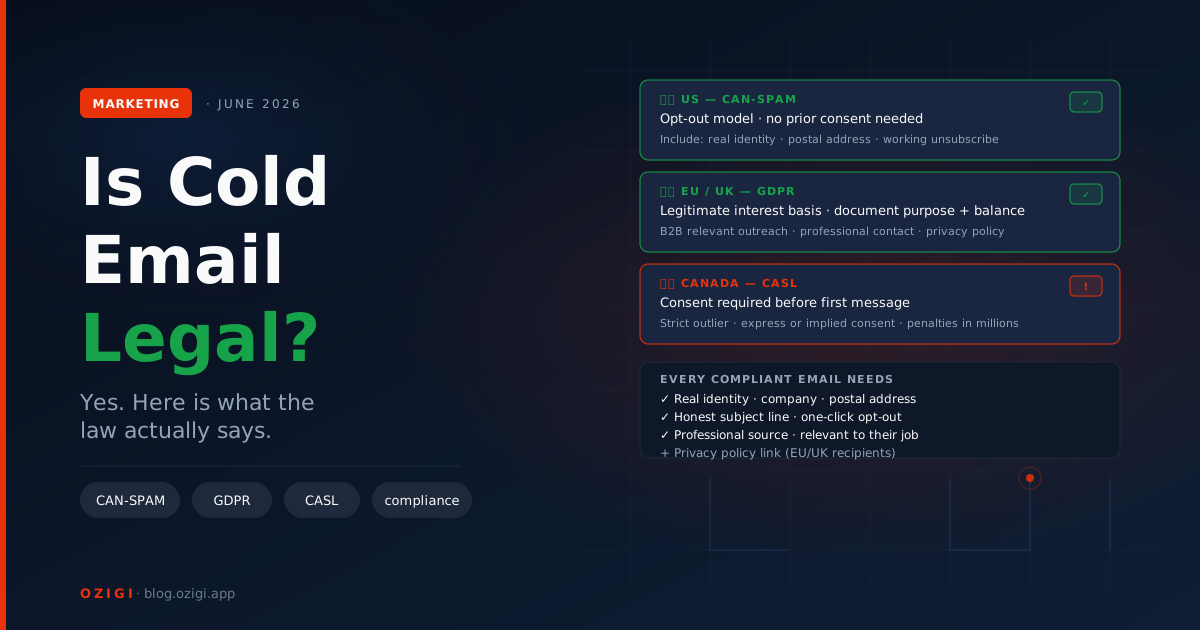
The privacy layer. Laws like the GDPR attach to personal data no matter how it was gathered. A scraped profile is still personal data, and using it for outreach triggers real obligations, lawful basis, transparency, honoring objections, which mass-scraped databases are structurally bad at meeting. European regulators have fined companies specifically for scraped-profile databases. The adjacent question, what outreach itself requires by jurisdiction, is covered in is cold email legal.
Stacked together: even where the anti-hacking question tilts friendly, the contract and privacy layers do not, and "a court once said public scraping isn't hacking" is a thin place to stand a business.
What Are the Practical Risks?
Three, in ascending order of how much they should worry a small team.
Account restriction. LinkedIn's detection targets automation patterns, and the account that gets restricted is yours, the one holding your professional network and, for many founders, a distribution channel. Scraping tools risk an asset they do not own.
Legal exposure. Small companies rarely get sued first, but "rarely" is doing work in that sentence, and privacy regulators have shown they will pursue scraped-data practices. The exposure compounds if scraped data feeds high-volume outreach, because volume is what attracts complaints, and complaints are what attract attention.
Data quality. The quiet one. Scraped and pre-scraped databases decay fast, people change jobs constantly, and stale records surface downstream as bounces and misdirected emails. Bounce rates above roughly 2% damage sender reputation, which means a scraped list can quietly tax the deliverability of everything you send, including to the good addresses.
What Should You Do Instead?
Three compliant routes, and they conveniently rank by list quality too.
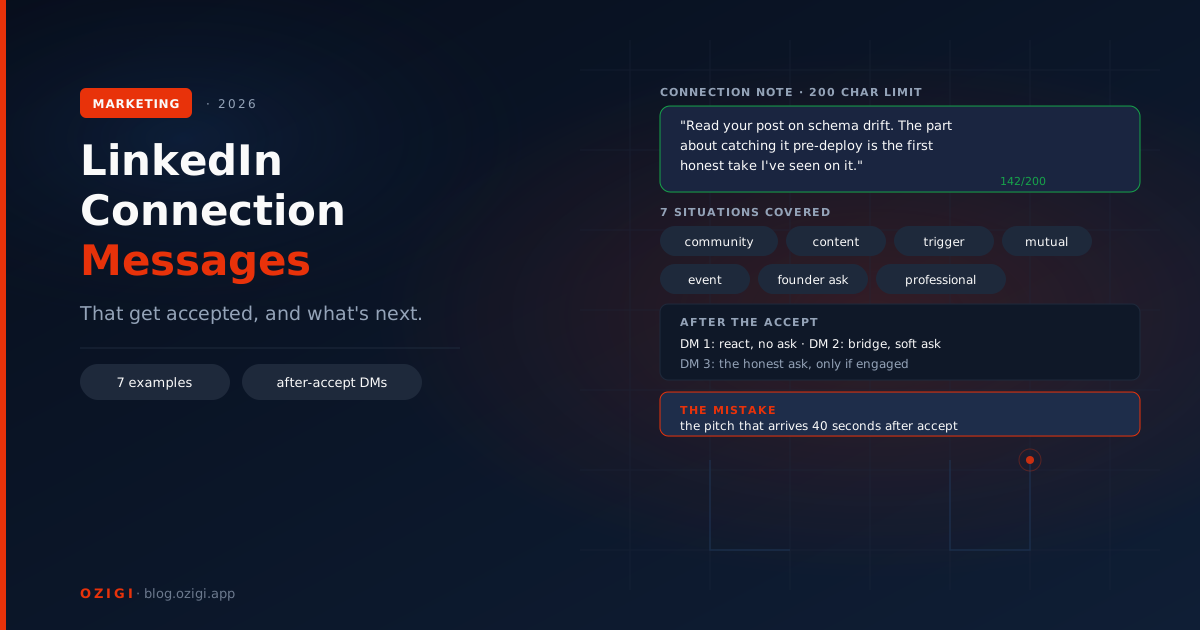
Use LinkedIn as a research surface, manually. Reading profiles, following the evidence, and recording what you learn about genuinely qualified prospects is using the product as intended. It is slower per name, and that is partly the point: the constraint forces qualification, and qualification is the step that decides reply rates anyway. Pair the research with real connection outreach, the message craft is in LinkedIn connection message examples.
Pay for LinkedIn's own tooling where it fits. Sales Navigator and LinkedIn's official products exist for exactly the search-and-filter work scrapers imitate, with the terms-of-service question removed. For teams whose ICP lives mostly on LinkedIn, this is the boring correct answer.
Source evidence where it is licensed to be read. For developer-facing products especially, the strongest buying signals often are not on LinkedIn at all: public GitHub activity, package ecosystems, Dev.to and technical blogs, community posts. Sourcing across those surfaces, against a written ideal customer profile, produces lists with the evidence already attached, which is what the first email needs anyway. This is the route Ozigi is built on: it sources and scores leads from public developer platforms and drafts outreach from each person's actual work, no scraping of LinkedIn involved, and the drafting end is free to test at the LinkedIn message generator.
The pattern across all three: compliant sourcing costs more effort per name and returns more evidence per name, and evidence per name is the metric that predicts replies. The scraper's ten thousand rows optimize the number that does not matter.
Frequently Asked Questions
Is LinkedIn scraping illegal? It is not cleanly illegal or legal, and the gray zone is narrower than tool marketing implies. US case law on scraping public pages has shifted over the years and settled little; LinkedIn's user agreement prohibits scraping outright and the company litigates against it; and privacy laws like GDPR govern the scraped data itself regardless of collection method. Treat vendor claims of "fully legal" with suspicion, and ask a lawyer for decisions that matter.
Can you get banned for scraping LinkedIn? Yes. LinkedIn's terms prohibit automated data collection, its detection systems target automation patterns, and account restriction is the standard consequence. The account at risk is your own professional presence, which for most founders is worth more than any list a tool could extract.
What did hiQ v. LinkedIn actually decide? The part everyone cites: scraping publicly visible pages was held not to violate the US anti-hacking statute's "unauthorized access" clause. The part everyone forgets: the case continued on other theories, hiQ lost on breach of contract, and the company folded. It is a narrow precedent about one law, not a green light for scraping.
Is it legal to buy scraped LinkedIn data? Buying does not launder the collection. Privacy laws like GDPR apply to the personal data itself, and regulators have fined companies over scraped-profile databases. There are also practical costs: pre-scraped databases decay quickly, and their bounce rates tax your sender reputation.
How do I get LinkedIn leads without scraping? Three routes: manual research using LinkedIn as intended, paired with genuine connection outreach; LinkedIn's own paid tooling like Sales Navigator for search at scale; and evidence-based sourcing from openly readable platforms, GitHub, Dev.to, communities, scored against a written ICP. All three produce fewer names with more evidence, which is the trade that actually improves reply rates.
Ozigi sources leads from public developer platforms and drafts outreach from each person's real work, no scraping required. Try the free LinkedIn message generator, no signup needed.
About the author
Founder and CEO of Ozigi. Writes about go-to-market, content strategy, and the tooling small teams rely on.