Newsletter Subject Lines: What Earns the Open Every Week (30 Patterns)

Founder and CEO of Ozigi. Writes about go-to-market, content strategy, and the tooling small teams rely on.
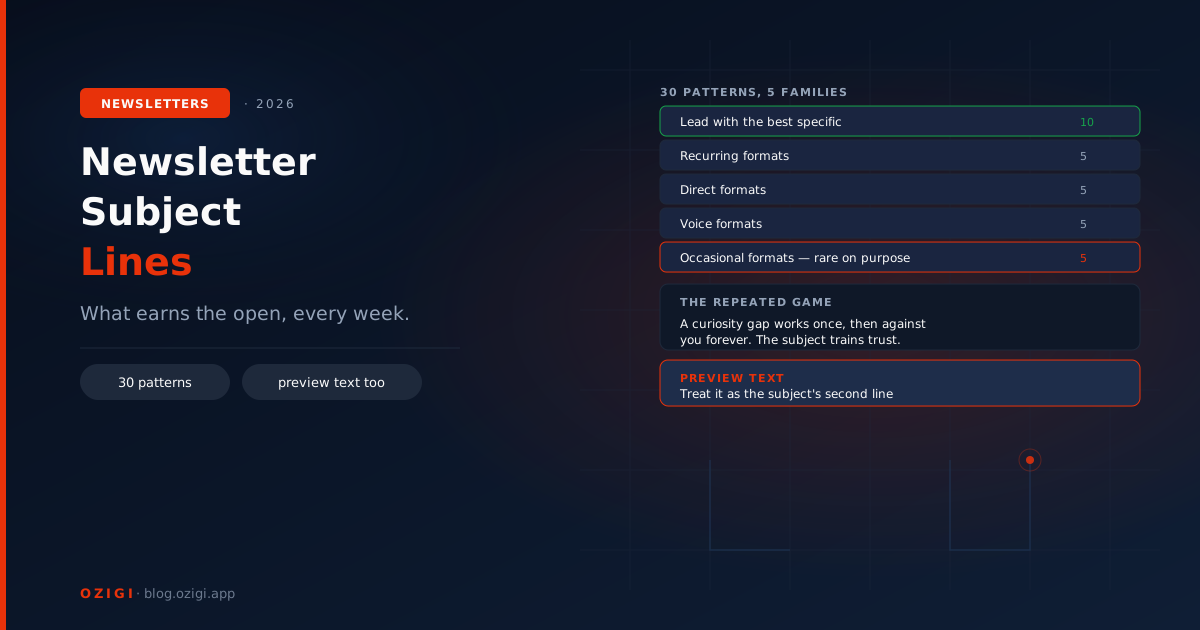
TL;DR: Newsletter subject lines play a different game than cold email: repeated, not one-shot. Every subject trains subscribers on what your emails are worth, so a clickbait open this week is paid for with skipped issues next month. What holds up: lead with the issue's single best specific, a number, a claim, a lesson, in 4 to 8 words, and treat preview text as the subject's second line instead of letting "view in browser" waste it. The curiosity gap works until the first mediocre payoff, then works against you forever. 30 patterns below, built for week after week.
A cold email subject has to win one open from a stranger. A newsletter subject has to win the fifty-second open from someone who already knows you, and that changes everything. Your subscriber is not asking "who is this?" They are asking "is this issue worth it?", and their evidence is every subject you have sent before.
Which means the real job of a newsletter subject line is not maximizing this week's open rate. It is keeping the promise, week after week, so the open becomes a habit instead of a decision.
What Makes Newsletter Subject Lines Different?
The repeated game. One-shot senders can afford tricks; a newsletter pays for every trick with trust. The curiosity gap is the clearest case: "The mistake that almost killed us" wins opens right up until the payoff underdelivers once, and from then on the same subscriber discounts every dramatic subject you send. Clickbait in a newsletter is borrowing open rate from your future self at a terrible interest rate.
The repeated game also pays differently. A subject format subscribers recognize, your numbering, your recurring segment name, your voice, compounds: recognition is the fastest path through a crowded inbox. The tension of newsletter subjects is exactly this, familiar enough to be recognized, specific enough to be worth opening, and the 30 patterns below all live inside that tension.
Lead With the Best Specific
The reliable engine: find the single most interesting concrete thing in this issue and put it in the subject.
- The number: "From 6 incidents a month to 1"
- The lesson: "What shipping on Fridays cost us"
- The claim: "Most warmup tools measure the wrong thing"
- The finding: "We analyzed 200 cold emails. 9 got replies."
- The mistake: "I sent the wrong invoice for 3 months"
- The question the issue answers: "How many inboxes is too many?"
- The before/after: "The onboarding email, rewritten"
- The contrarian take: "Stop A/B testing your subject lines"
- The tool verdict: "[Tool], two months later"
- The quote from the issue: "'We fired our agency and grew faster'"
If the issue has no subject-worthy specific, that is feedback about the issue, not the subject, and it usually traces back to format choice, the effort-sorted formats that generate specifics weekly are the fix.
The Recurring Formats
Recognition patterns that compound over months.
- Numbered issues: "#47: the deliverability issue"
- The named segment: "Teardown Tuesday: Stripe's pricing page"
- The consistent frame: "3 links, 1 lesson, 1 number"
- The date anchor: "What changed in cold email this month"
- The series: "Scaling to 10k, part 4"
Numbering divides people, so decide by what it signals: to committed audiences it reads as a body of work; to marginal subscribers it reads as homework piling up. Niche, practitioner audiences generally reward it.
The Direct Formats
Plain statements of what the issue is. Undervalued because they feel boring to write, and effective because subscribers are choosing issues, not senders.
- "How we structure follow-up sequences"
- "The 2026 sender rules, translated"
- "Everything I know about founder-led sales"
- "A better way to run changelogs"
- "Your questions on domain warmup, answered"
The Voice Formats
Formats that only work because a person writes them, which is the moat.
- The admission: "I was wrong about open rates"
- The aside: "This one is mostly about a spreadsheet"
- The low-stakes flex: "We hit 1,000 subscribers. Here's the boring truth."
- The anti-sell: "Skip this issue if you've never sent a cold email"
- The conversation: "The reply that changed my roadmap"
The Occasional Formats
Effective precisely because they are rare. More than a few times a year and they become noise.
- The milestone: "Issue 100"
- The big announcement: "We built the thing you kept asking for"
- The correction: "I got the math wrong last week"
- The year in numbers: "2026, audited"
- The last-chance-that-is-real: "Price changes Friday" (only when it does)
What About Preview Text?
Preview text is the subject's second line, 40 to 90 more characters shown right next to it, and most newsletters hand it to "View this email in your browser" by accident. Set it deliberately: extend the subject's promise ("From 6 incidents to 1" / "and the config change that did it") or add the second-best specific from the issue. Subject and preview together are your whole storefront; writing one and defaulting the other is stocking half the window.
What Should You Measure?
Open rate, but over months, not per issue, and always next to click and reply rates. Apple's mail privacy inflates opens unevenly, so single-issue comparisons are noisy; the signal is the trend and the gap between opens and clicks. A subject style that lifts opens while clicks stay flat is winning the wrong game, the repeated-game equivalent of the bait subject, and the fix is the same as everywhere else in email: put the realest thing forward. The one-shot version of this craft, where the reader has never heard of you, runs on different rules, covered in cold email subject lines.
The weekly practical problem is neither patterns nor measurement, it is that the subject gets written at 11pm after the issue is done, which is when "Issue 47" happens. The free newsletter generator drafts subject and preview text from the issue's actual content, so the best specific gets found and front-loaded instead of left in paragraph four. No signup required.
Frequently Asked Questions
What is a good subject line for a newsletter? The issue's single best specific in 4 to 8 words: a number, a lesson, a claim, a finding. "From 6 incidents a month to 1" beats "This week's newsletter" because subscribers choose issues, not senders, and the specific is the evidence this issue is worth it.
How long should a newsletter subject line be? Four to eight words, roughly 40 characters, with the specific front-loaded so truncation on phones cuts filler instead of substance. Preview text adds another 40 to 90 characters, use it as the subject's second line rather than leaving it to default text.
Do curiosity gap subject lines work for newsletters? Once, and then in reverse. The gap wins opens until the payoff underdelivers a single time, after which the same subscribers discount every dramatic subject you send. In a repeated game, the specific beats the tease because it can keep its promise every week.
Should you number your newsletter issues? For niche, practitioner audiences, usually yes, numbering signals a body of work and rewards streak-minded readers. For broad or casual audiences, it can read as accumulating homework. Either way the number is a frame, not a subject: pair it with the issue's specific, "#47: the deliverability issue."
What open rate is good for a newsletter? Healthy niche newsletters commonly sit anywhere from the high 30s to 60% and above, but the per-issue number is noisy thanks to privacy-driven open inflation. Watch the trend over months and the click rate beside it; a rising open rate with flat clicks means the subjects are outrunning the issues.
Ozigi drafts the issue, the subject, and the preview text from your raw material, best specific first, filler blocked. Try the free newsletter generator, no signup required.
About the author
Founder and CEO of Ozigi. Writes about go-to-market, content strategy, and the tooling small teams rely on.