Email Sign-Offs: What 45 of Them Actually Signal (and Which to Use)

Founder and CEO of Ozigi. Writes about go-to-market, content strategy, and the tooling small teams rely on.
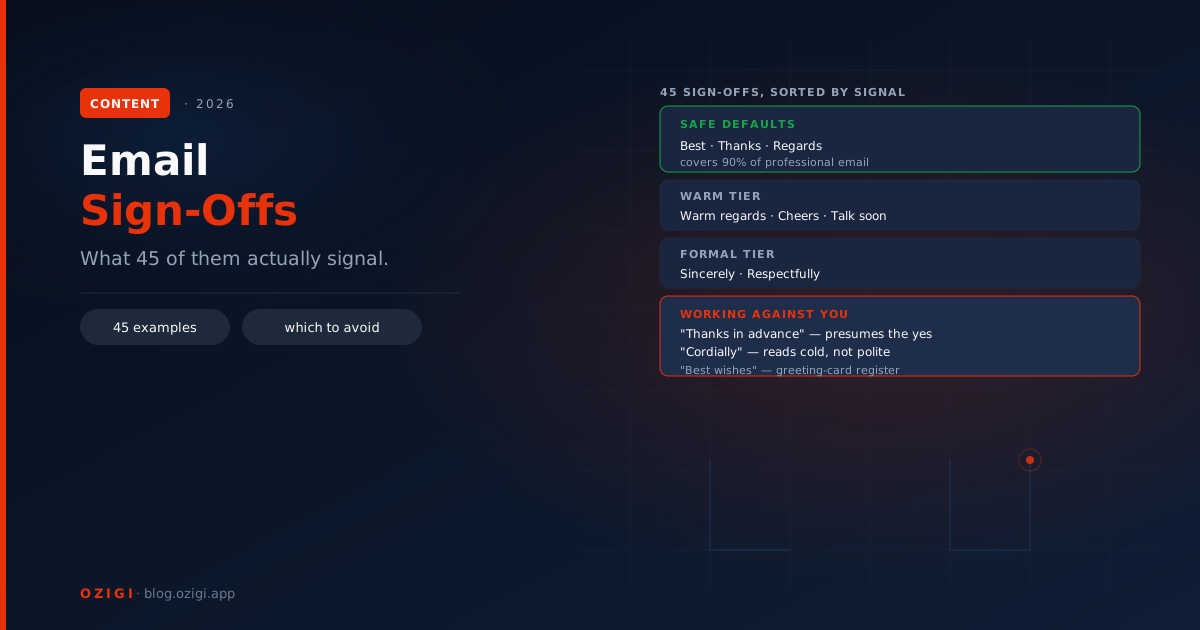
TL;DR: The sign-off is the last thing read and the first thing judged, and every option signals something whether you chose the signal or not. Safe defaults: "Best," "Thanks," and "Regards" cover 90% of professional email. Warmth tier: "Warm regards," "Cheers," "Talk soon." Formal tier: "Sincerely," "Respectfully." Quietly working against you: "Thanks in advance" (presumes the yes), "Best wishes" (greeting-card register), "Cordially" (frost), and no sign-off at all in a first email (abrupt). Match the register of the relationship, then stop thinking about it.
Nobody remembers a good sign-off, and that is the point of one. The sign-off's job is to close the email without leaving a residue, and the wrong one leaves a residue: too stiff for the relationship, too chummy for the ask, or subtly presumptuous in a way the reader feels but does not name.
Here are 45 of them, sorted by the signal they actually send, with the situations where each one fits.
What Does Your Email Sign-Off Actually Signal?
Register, effort, and expectation, in about one word. Register: how formal you think this relationship is. Effort: whether you chose the closing or defaulted to it. Expectation: what you assume happens next, which is where sign-offs most often go wrong, "Thanks in advance" assumes the yes before it is given, and readers notice.
The stakes are asymmetric. A well-matched sign-off earns nothing; a mismatched one costs a little every time. So the goal is not the perfect closing, it is removing the ones quietly costing you.
The Safe Defaults: Right Almost Everywhere
| Sign-off | Signal | Use it for |
|---|---|---|
| Best | Neutral, professional, effortless | The universal default |
| Thanks | Warm, earned when they did or will do something | Requests, replies, most work email |
| Thank you | Same, one notch more formal | Requests upward or outward |
| Regards | Neutral, slightly cool | External email, unfamiliar recipients |
| Best regards | Regards with the edge sanded off | First professional contact |
| All the best | Warm-neutral | Closings that end a thread |
| Many thanks | Gratitude, British register | After real help |
Any of these seven can be your everything sign-off. Consistency reads as confidence; rotating through closings reads as someone thinking too hard about closings.
The Warm Tier: For Relationships That Exist
| Sign-off | Signal | Watch out |
|---|---|---|
| Cheers | Friendly, informal | Fine in tech and UK/AU contexts, casual for US finance and law |
| Talk soon | Ongoing relationship | Only if you plausibly will |
| Warm regards / Warmly | Genuine warmth | Slightly soft for hard asks |
| Have a great weekend | Human, time-aware | Expires by Monday |
| Speak soon | Talk soon in a blazer | Same rule |
| Looking forward to it | Positive expectation | Only after something is agreed |
| Appreciate you | High warmth, US casual | Earned relationships only |
The warm tier works when the warmth is true. Deployed on a stranger, it reads as technique, which is worse than "Regards."
The Formal Tier: Rare, but Load-Bearing
| Sign-off | Signal | Use it for |
|---|---|---|
| Sincerely | Full formality | Cover letters, legal, official letters |
| Respectfully | Deference | Government, military, formal disputes |
| Yours truly | Old-school formal | Traditional correspondence |
| Yours faithfully | UK formal, unknown recipient | "Dear Sir or Madam" letters |
| Yours sincerely | UK formal, named recipient | Named formal letters |
| With appreciation | Formal gratitude | Thank-you letters that matter |
Using these in normal work email creates distance, which is occasionally exactly the tool you want: "Respectfully" at the end of a disagreement signals the disagreement is serious and the manners are intact.
The Ones Quietly Working Against You
Thanks in advance. The most common self-inflicted wound in professional email. It presumes the yes, which readers register as pressure wearing gratitude's clothes. "Thanks for considering it" carries the courtesy without the presumption.
Best wishes. Greeting-card register; fine on a birthday, odd on a budget request.
Cordially. Technically polite, emotionally refrigerated. Almost always read as cold.
Warmest regards. The superlative oversells it; warmth with a sales tag.
Rgds / Thx / BR. Abbreviating the courtesy tells the reader they were not worth four more letters. From a phone in a live thread, forgivable; in a first email, not.
V/r. Standard inside military contexts, cryptic outside them. Know your audience.
Take care. Warm but faintly final, it can read like the end of the relationship rather than the email.
Blessings / Be well. Imports personal register into professional space; save for relationships that share it.
No sign-off, just your name. Efficient inside a fast-moving thread, abrupt as a closing move in a first or high-stakes email.
xoxo / Hugs. Not in professional email, including the ones where you think it is fine.
The Personality Tier: Handle With Intent
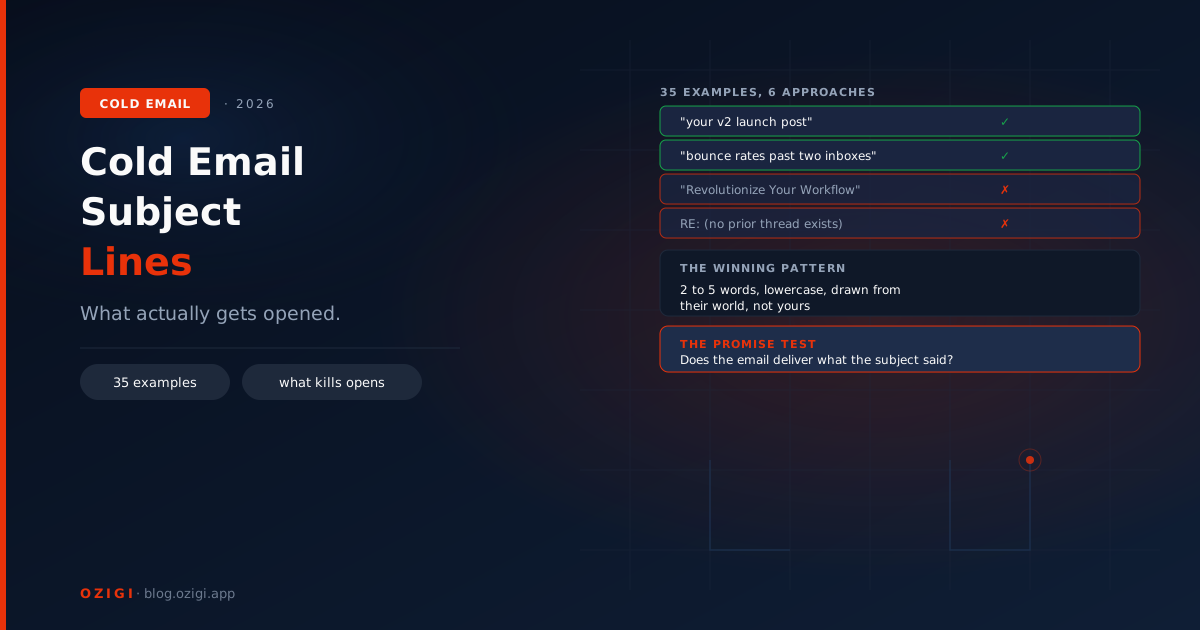
"Stay curious," "Onward," "More soon," "Go build something," a branded closing line can become a signature that people remember, and newsletters especially benefit from one. Two rules: it must sound like you on your least clever day, and it must survive being read by your most skeptical recipient. If a closing makes a stranger pause even one second on you instead of your message in a cold email, it costs more than it signals, which is the same specificity-versus-cleverness tradeoff that governs cold email subject lines and openers.
How Do You Choose? Three Rules
Match the register you have, not the one you want. The relationship sets the tier; escalate warmth only as the relationship earns it. When unsure, mirror what they use.
Let the ask set the weight. Small ask, light closing ("Thanks"). Big ask, weightier closing ("Thank you," "Best regards"). A heavy formal closing on a trivial ask reads as anxiety.
Then automate the decision. Pick one default for internal, one for external, one for cold, and stop deciding per-email. The same discipline applies to a follow-up after silence: keep the sign-off identical to the first email so the thread reads as one consistent voice, not a negotiation. The closing is the least important sentence you send; it just punishes getting it wrong. The sentences that actually move replies are the opener and the ask, and those are covered in conversational cold email examples, with the full structures in the cold email templates guide. If the email around the sign-off is the part you want handled, the free cold email generator drafts it in your voice with the corporate filler blocked, no signup required.
Frequently Asked Questions
What is the best email sign-off? "Best" for a universal default, "Thanks" when a request or reply is involved, and "Regards" for unfamiliar external contacts. Any of the three works nearly everywhere, and using one consistently reads better than rotating.
Is "Best" too cold as a sign-off? No. "Best" is the neutral standard of professional email, unmarked and safe across industries. Cold would be "Cordially" or "Rgds." If you want a notch more warmth, "All the best" or "Thanks" does it without changing register.
Is "Thanks in advance" rude? Mildly, and more than most senders realize. It presumes agreement before it is given, which reads as polite pressure. "Thanks for considering it" or a plain "Thanks" keeps the gratitude and drops the presumption.
What sign-off should I use for a cold email? "Best," "Thanks," or just your first name after a plain final line. A cold email has not earned warmth, and clever closings make the reader think about you instead of the ask. Neutral and invisible wins.
Do email sign-offs even matter? Asymmetrically. A good one earns nothing; a mismatched one quietly costs, per email, forever. The efficient move is choosing safe defaults once and spending the attention on the opener and the ask, which are the sentences that decide replies.
How should I sign off an email to my boss? Match your normal working register: "Thanks" for requests, "Best" otherwise, mirroring their style if formality is unclear. Escalate to "Thank you" or "Best regards" for formal asks like reviews, raises, or references.
Ozigi writes the whole email above the sign-off: outreach, follow-ups, and content in your voice, with the filler blocked. Try the free cold email generator, no signup required.
About the author
Founder and CEO of Ozigi. Writes about go-to-market, content strategy, and the tooling small teams rely on.