27 Newsletter Ideas People Actually Open (Sorted by Effort)

Founder and CEO of Ozigi. Writes about go-to-market, content strategy, and the tooling small teams rely on.
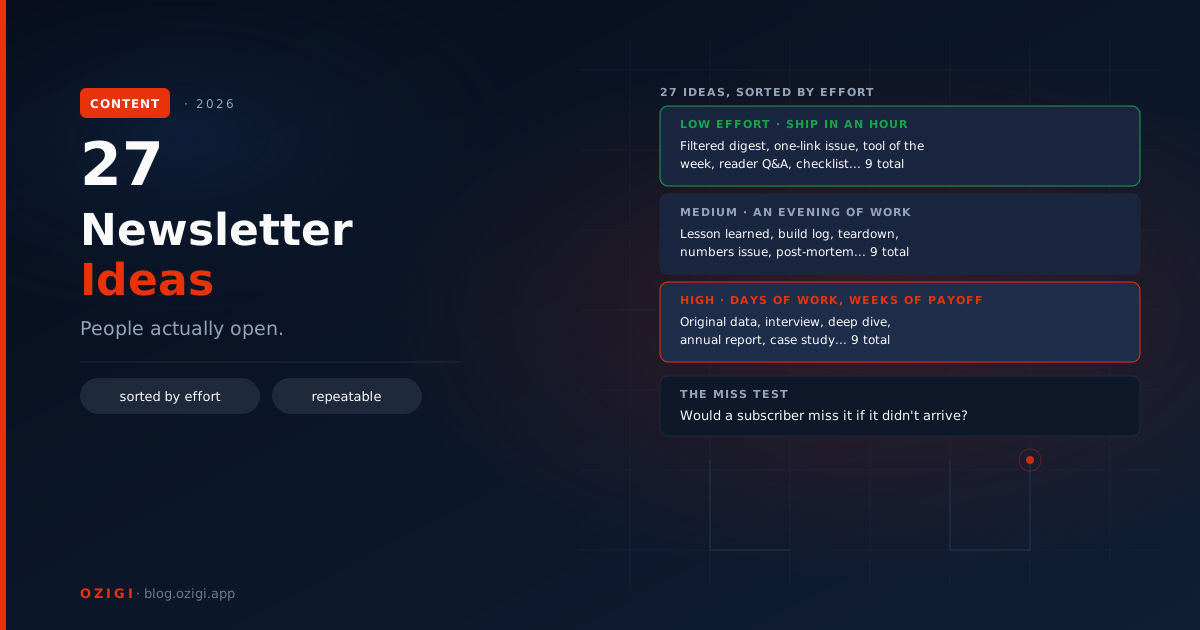
TL;DR: The newsletter ideas that survive are repeatable formats, not one-off topics. Below are 27, sorted by effort: low (curation and lists you can ship in an hour), medium (lessons, teardowns, and behind-the-scenes that take an evening), and high (original data, interviews, and deep dives that take days but earn forwards). Pick one primary format and one alternate, and run them for ten issues before judging. The test for any idea: would a subscriber miss it if it did not arrive?
Most newsletter idea lists are padded with filler like "share company news" and "announce your product updates." Nobody subscribes for your company news. They subscribe because the email makes them slightly better at something, or saves them time, or tells them something true that nobody else is saying.
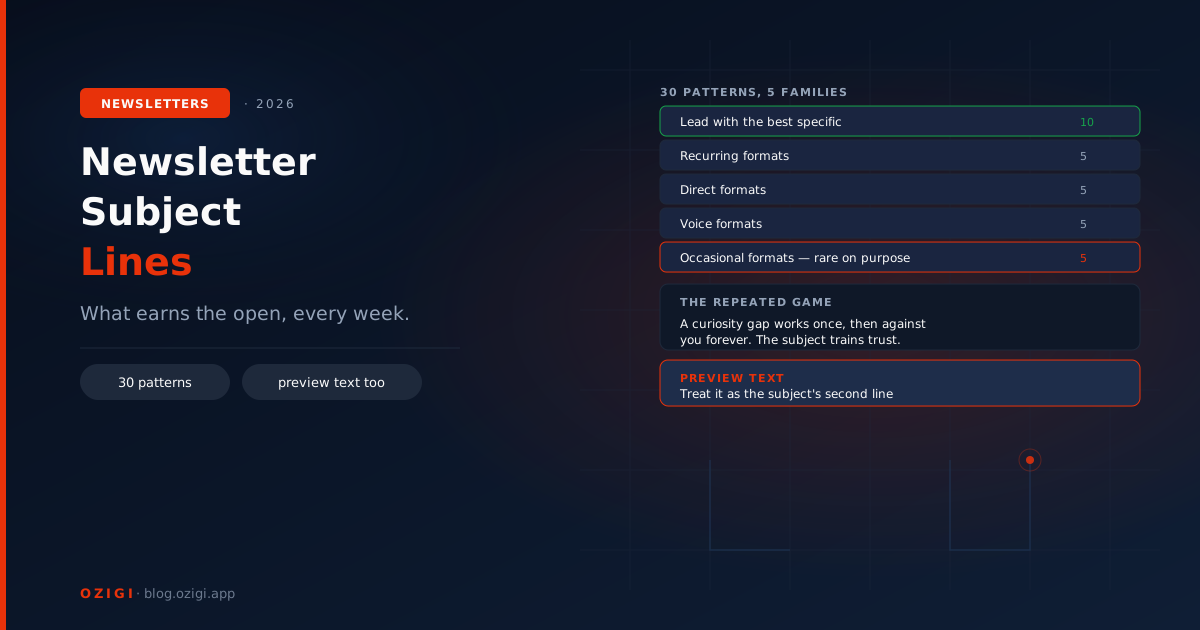
So every idea below passes one test: it serves the reader first. They are sorted by effort because the real constraint is not creativity, it is what you can sustain every week. A newsletter that ships beats a better newsletter that does not, which is the founding argument of how to start a newsletter in 2026.
Low-Effort Ideas: Shippable in an Hour
Curation and compression. Your reader's alternative is reading everything themselves; you save them the time.
- The filtered digest. The 5 things worth reading in your niche this week, with one honest sentence each on why. The value is what you left out.
- The one-link issue. A single piece worth their time, plus your take on it. Radical in an inbox full of 20-link dumps.
- The tool of the week. One tool, what it replaced for you, and the catch nobody mentions.
- The stat that matters. One number from your industry, unpacked: where it came from, what it changes.
- The question issue. A sharp question your audience is quietly asking, answered in 300 words.
- Reader Q&A. Answer one subscriber question per issue. Bonus: it teaches you what to write next.
- The swipe file. One great example from your field, an email, a landing page, a chart, and why it works.
- The anti-recommendation. Something popular in your niche you would skip, and why. Honesty compounds trust faster than praise.
- The checklist. One process your reader repeats, compressed to a checklist they can save.
Medium-Effort Ideas: An Evening of Work
Your experience, structured. Nobody can copy these because nobody else lived them.
- The lesson learned. One mistake, what it cost, what changed. The most consistently opened format in operator newsletters.
- The build log. What you shipped, what broke, real numbers. Works for products, audiences, and revenue alike.
- The teardown. A structured breakdown of something in your niche: a competitor's onboarding, a famous email, a pricing page.
- The before-and-after. A rewrite, a redesign, a refactor, shown side by side with the reasoning.
- The unpopular opinion. One position your industry disagrees with, argued properly. Earns replies and unsubscribes, both fine: it sharpens the list.
- The process issue. Exactly how you do a repeated task, timings, tools, templates included.
- The numbers issue. Monthly metrics with commentary. Transparency is a format, and it retains like nothing else.
- The failure post-mortem. What you tried that did not work. Rarer than success stories, and read more closely.
- The reading notes. What you underlined in a book or long report your readers would not finish themselves, and what you disagreed with.
High-Effort Ideas: Days of Work, Weeks of Payoff
These earn forwards, citations, and subscribers who arrive pre-sold. Run them monthly or quarterly alongside a lighter weekly format.
- Original data. Survey your audience or analyze public data nobody has compiled. The only content category that gets cited by other newsletters.
- The interview. One practitioner your readers cannot access, asked the questions they would ask.
- The deep dive. The definitive 2,000-word answer to one question in your niche.
- The annual report. Everything you learned this year, with numbers. Evergreen and endlessly forwardable.
- The prediction issue. Where your niche is going, with reasoning you can be graded on later. Grade yourself publicly when the time comes: idea 24.
- The scorecard. Revisit old predictions or advice and mark them right or wrong. Almost nobody does this, which is exactly why it builds authority.
- The collaboration issue. Co-write with a peer newsletter and swap audiences.
- The resource library. The complete, organized list of everything worth knowing on one narrow topic.
- The case study. One reader or customer's result, told with real numbers and the messy middle left in.
How Do You Choose Which Newsletter Idea to Use?
Pick one primary format from the effort tier you can honestly sustain, add one alternate for variety, and commit for ten issues. Consistency compounds; novelty resets the clock every week. The selection questions:
| Question | If yes |
|---|---|
| Do you read widely in your niche anyway? | Filtered digest or one-link issue |
| Are you building something in public? | Build log or numbers issue |
| Do you have strong takes? | Unpopular opinion or anti-recommendation |
| Do you have access to data or people? | Original data or interviews, monthly |
| Are you time-poor but consistent? | Any low-effort format, weekly, no exceptions |
Then apply the miss test to your choice: if this issue did not arrive on Thursday, would anyone notice? Formats built on your judgment, your numbers, or your curation pass. Formats built on your announcements do not.
The honest constraint underneath all of this is production time. The format is repeatable but the writing still takes the hour or the evening, every single week, which is where most newsletters die around issue eight. This is the gap the free newsletter generator is built for: feed it your raw material, the links you saved, your notes, your numbers, and it drafts the issue in your voice with the AI filler blocked, so the weekly cost drops to editing instead of writing. No signup, so you can test it on this week's issue.
Frequently Asked Questions
What should I write in my newsletter? Whatever your reader would miss if it stopped arriving: filtered links, lessons with numbers, teardowns, or original data. Company news and product announcements serve the sender, not the reader, and read like it. Pick one repeatable format over chasing a new topic every week.
How do I come up with newsletter content ideas every week? Choose a format, not a topic. A format like "one lesson, one number, one link" refills itself from your normal week; a blank page does not. Keep a running note of questions people ask you, and let reader replies feed the queue.
How long should a newsletter be? As short as the value allows. A one-link issue can be 150 words; a deep dive can be 2,000. Length is not the variable readers punish, padding is. Most sustainable weekly formats land between 300 and 800 words.
How often should I send my newsletter? Weekly if you can sustain it, biweekly if not, and never a cadence you will break. A predictable biweekly beats an erratic weekly, because the habit you are building is theirs, not yours.
Do newsletters still work in 2026? More than most channels, because a subscriber list is the only audience you own outright. Search and social reach are rented from algorithms that change; the inbox does not. The full case and setup guide is in how to start a newsletter in 2026.
Ozigi turns your links, notes, and numbers into a full newsletter issue in your voice, with the AI filler blocked at generation. Try the free newsletter generator, no signup required.
About the author
Founder and CEO of Ozigi. Writes about go-to-market, content strategy, and the tooling small teams rely on.